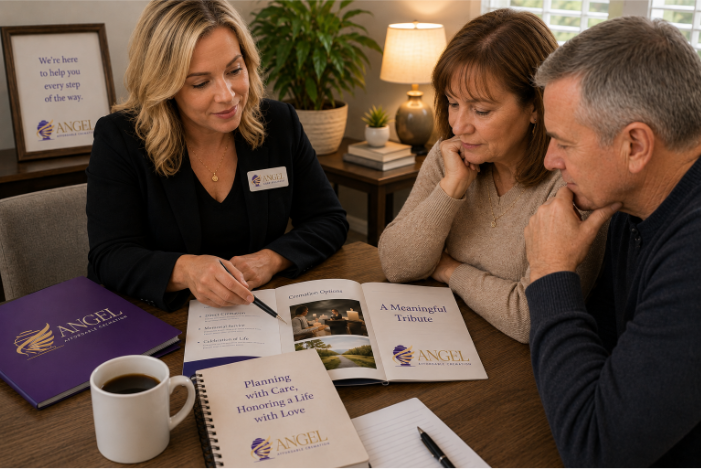
Learn the immediate steps to take after a loved one dies, including who to call, legal requirements, and how to begin funeral or cremation arrangements.
Losing someone you love is one of life's most difficult experiences. During those first few hours, it can be hard to think clearly or know what needs to happen next. While every situation is different, understanding a few immediate steps after a death can help reduce uncertainty and allow you to focus on your family.
Whether the death occurs at home, in a hospital, a nursing facility, or another location, knowing who to contact and what to expect can make the process more manageable.
What Should You Do Immediately After Someone Dies?
The first step depends on where the death occurred.
Contact Your Chosen Funeral Home or Cremation Provider
One of the most important decisions is selecting a funeral home or direct cremation provider.
They will:
- Arrange transportation of your loved one
- Guide you through required paperwork
- Explain available services
- Obtain certified death certificates
- Coordinate permits and authorizations
- Help you understand your options without overwhelming you
An experienced funeral professional can simplify much of the process during an emotional time.
Gather Important Information
Having certain information readily available can make arrangements easier.
You may need:
- Full legal name
- Date and place of birth
- Social Security number
- Military discharge papers (DD-214), if applicable
- Marriage certificate
- Driver's license or state ID
- Insurance information
- Veteran information
- Next of kin contact information
Don't worry if you cannot locate everything immediately. Your funeral director can help identify what is needed first.
Notify Close Family Members or Those Relevant
Secure the Home and Personal Property
If your loved one lived alone, take steps to protect their property.
Consider:
- Locking doors and windows
- Caring for pets
- Collecting mail
- Watering plants
- Removing perishable food
- Securing valuables
- Ensuring utilities remain active if necessary
These small tasks can prevent additional stress later.
Locate Important Documents
As you begin making arrangements, gather important legal and financial documents such as:
- Will or trust
- Advance directives
- Life insurance policies
- Bank account information
- Property deeds
- Vehicle titles
- Pension information
- Retirement accounts
Not every document is needed immediately, but knowing where they are can be helpful in the coming weeks.
Obtain Certified Death Certificates
Let Us Help You Through the Next Steps
When someone you love passes away, you don't have to navigate the process alone. A compassionate funeral or cremation provider can guide you through every step, answer your questions, and help you make informed decisions with confidence.
Whether you're planning a simple direct cremation or a personalized memorial service, experienced professionals are available to help your family with care, dignity, and respect.